

A genuine reality check is not a punishment. It’s a intentional pause I set up to assess whether my entertainment is still enjoyable. When I take a seat at a table or start a slot, the colors and sounds are designed to blur time. A reality check cuts through that fog. It poses to me bluntly: how long have I been in the session? What was my original bankroll? What does my current balance tell me about the path I’ve traveled? This guide isn’t about moralizing. I’m composing it to give you a mechanical framework, a set of tools and definitions, that enables me step outside the moment and make decisions with a clear head. Without that forced interruption, I’m running on impulse, and impulse is a awful accountant.
Defining the Reality Check Mechanism
A reality check, as I understand it, is a software-driven notification that shows on my screen after a set interval. It halts the action and shows me a snapshot of my activity. At BroWinner Casino, I can configure it to trigger at intervals I select. The screen might show elapsed time since login, total wagered, and net result. This isn’t a limit; it doesn’t stop me from playing. It only demands I acknowledge the numbers before I can click “continue.” The psychological weight of clicking “I understand” after seeing a loss is much more significant than mindlessly pressing spin. The power of the reality check lies entirely in that forced acknowledgment. It turns unconscious repetition into a conscious choice.
Analyzing and Using Account History for Self-Reflection
Deciphering the Raw Numbers
The account history page is the most straightforward diary I’ve ever kept. It removes my memory’s editing and displays me the exact chronology of deposits, withdrawals, wagers, and outcomes. I’ve made it a habit to review this ledger not just for auditing, but to detect patterns. If a Wednesday night regularly concludes with me overriding my deposit limit or playing well past my session cap, the data identifies that specific context as high-risk. The reality check pop-up provides a snapshot, but the ledger indicates the trend. I assess the ratio of deposits to withdrawals, the average time between sessions, and the acceleration of bet sizes during losing streaks. The numbers don’t evaluate me, but they don’t deceive me either.
Aligning Reality with Perception
I often do a small mental exercise where I record how much I think I spent in a week before looking at the history. The gap between that subjective guess and the objective total is my blind spot. If I regularly misjudge my spending, that’s not a sign of poor memory, it’s a sign that my engagement has become dissociated from reality. Reality checks are most effective when I educate my guesses. By comparing my perception with the hard data in the account history, I train myself to be more accurate. Over time, if I cannot bridge the gap between perception and reality, that tells me the reality check intervals need to be tightened, or that a self-exclusion period is the logical next step.
Identifying the Clues That a Reality Check Is Needed
A reality check tool only works if I activate it before I desperately need it desperately. I look for specific behavioral indicators in myself. The first signal is chasing losses: depositing immediately after a losing session with the specific and intense intent of getting even. The second is fabricating about time or money to people I share a home with. If I’m minimizing windows or hiding bank statements, the shame is showing me something I should hear. The third signal is the disappearance of enjoyment. When I’m playing not for the thrill of the game but simply to escape a lingering sense of boredom or anxiety, the activity has mutated. If these signals are evident, it means the default settings, with no limits and no pop-ups, don’t suffice. I have to enable the full suite of reality checks, loss limits, and time constraints, and I have to do it while I still have the awareness to establish those settings into place.
The Voluntary Exclusion Process Explained
Short-Term Time-Outs
At times I am not inclined to terminate my account for good, but I realize I require a break for a day or a week to reset my outlook. BroWinner Casino features a time-out feature for this purpose. When I activate a time-out, my account goes into a dormant state. I can’t log in, I can’t deposit, and I typically stop getting promotional content for the selected duration. This is a cooling-off period that serves as a circuit breaker. I utilize it when I notice I’m treating gambling like a side gig rather than a leisure activity. The strength of a time-out is its definiteness within that limited window. There is no cancellation feature I can press. I have to find something else to do with my evening, and by the point the time-out concludes, the impulse to chase has frequently vanished.
Long-Term Exclusion Strategies
To achieve a more significant reset, I may choose a long-term self-exclusion that spans months or years. This is a legal agreement between me and the company. After I sign up for a long-term exclusion, reopening the account before the term expires is usually not allowed, should I change my mind. I have to think about meticulously because it involves identity verification locks that hinder me from just setting up a new registration. I see this as a self-binding mechanism. By keeping it inherently challenging to gamble, I’m giving my self down the line no simple way out from the commitment I established in a lucid state. This is the most dependable tool on offer for anyone who acknowledges that a quick stop isn’t adequate to interrupt a damaging pattern.
When Outside Help Becomes an Essential Asset
Engaging Professional Support Systems
If I find that all the technical barriers I’ve set aren’t stopping me from finding alternative, unregulated ways to play, or that I’m preoccupied with when my ban will be lifted, seeking expert assistance is not excessive. There are globally accessible networks specializing in gambling-related harm. These are not merely helplines staffed by general advisors; they employ experts who grasp the brain’s response apuestas.as.com to gambling mechanics. They deliver organized counseling like Cognitive Behavioral Therapy designed for problem gambling. I view these services as a personal accountability system, a counselor who shows me my true situation and aids in self-reflection. Asking for support is a calculated action, not a weakness.
Community and Peer Support Groups
Outside of formal therapy, community support lets me see my struggles reflected in peers. When another person repeats my exact excuses, it’s eye-opening and helpful. Such forums offer an accepting environment centered on everyday impulse control. Most function anonymously and accommodate diverse time zones and routines. The simple act of checking in, of stating “I did not place a bet today,” can function as a manually triggered reality check. This introduces a social responsibility that no app, however sophisticated, can offer. Blending technological safeguards with human interaction forms the ultimate safety net.
Comprehending Session Time Constraints
Time is the element I’m most likely to lose track of. Casino games are crafted to be immersive, removing clocks and windows from view. A session time limit is a feature I can activate to log me out automatically after a set number of minutes of nonstop play. I often set this to a period that corresponds with the length of a movie or a sports match. Once the counter hits zero, the screen locks, and I must actively decide to log back in, often encountering a mandatory cool-off period before I can do so. This breaks the trance state. I’ve realized that even a five-minute barrier between sessions greatly reduces the compulsion to “just keep playing a little longer.” Without this tool, a planned thirty-minute session can easily stretch into a lost evening.
Loss Limits to Shield Your Budget
A loss limit is the hardest safety net I can establish, and I treat it with the same respect I would a fire extinguisher https://browinnercasino.com.es/responsible-gambling/. It is not an objective to aim for. It is a firm limit. I configure a loss limit so the system calculates my net negative balance over a specific timeframe. Once my monitored losses exceed that limit, the software prevents me from placing any further bets. The period could be a solitary day, a week, or a month. I prefer a daily loss limit because it splits my entertainment budget into small, digestible portions. When I encounter a loss limit, I’m not able to “borrow” from tomorrow’s limit. The system enforces a hard stop. This defends me from the “double or nothing” instinct that converts a manageable deficit into a financial wound.
Betting Limits and Game Pace Controls
While deposit limits control how much money goes into play, wager limits control the speed at which I commit that money to risk. I can define a maximum amount per spin, per hand, or per round. This reduces the pace of play. In a fast-paced slot, where a thousand spins can happen in an hour, a low wager limit makes sure that a losing streak doesn’t exhaust a balance in minutes. It compels the game to last longer, giving my reality check timer a chance to appear and act before I’ve spent my budget. I also examine loss limits in conjunction here: the wager limit acts as a throttle, the loss limit serves as the engine kill switch. Together, they form a mechanical barrier against “tilt,” a state where I increase my bet size recklessly to recover a loss quickly.
Tuning Your Safety Net Gradually at BroWinner Casino
I do not consider my responsible gambling settings as a fixed contract; I treat them as a dynamic system that demands rebalancing. If I’ve set a deposit limit so large that it triggers no friction at all, it’s not a working limit. I regularly tighten the constraints to test my own reaction. If extending a time-out from twenty-four hours to one week provokes me distress, that distress is diagnostic data. It indicates me the attachment is presently too strong. At BroWinner Casino, narrowing limits generally becomes active immediately, while relaxing them enforces a mandatory cooling-off delay. This asymmetric design is deliberate, and I acknowledge it. It blocks an impulsive version of me from dismantling the safety net mid-session. The fine-tuning of these tools is a competence in itself, one that develops as I become more honest about my own conduct patterns.
Setting Deposit Limits as a Preventative Tool
Per-Day, Per-Week, and Per-Month Caps
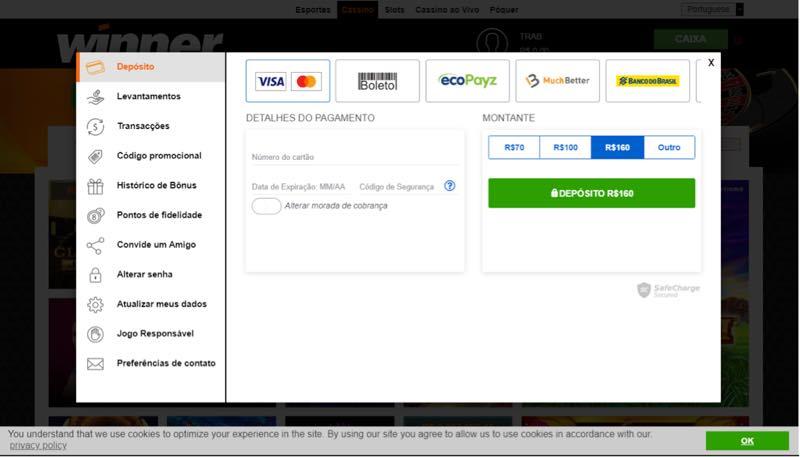
Before I access a gaming lobby, I can set a cap on how much I move from my wallet to my casino balance. I can select a daily cap that resets at midnight, a weekly allotment covering seven days, or a monthly total. When I define a daily cap of, say, a fixed sum, I’m making a decision for my future self. That future self might get annoyed when a deposit is rejected at the peak of excitement, but that rejection is the system operating exactly as I planned. It forces me to stop and wait for the clock to renew, a cooling-off period that often rescues me from following a bad session into a deeper hole.
The Instant Effect of a Declined Transaction

When a deposit doesn’t go through because I meet my cap, the first sensation is often anger. I’ve sensed it myself, a jolt of irritation at the software for getting in my way. But I also acknowledge that this irritation is a indicator. It reveals me I was operating in a state of urgency, not leisure. A rational entertainment budget doesn’t require urgent top-ups. The declined transaction is a window reflecting my emotional state back at me. If I can’t quietly wait until the next cycle begins, that urgency is data I need to process thoroughly. The block isn’t there to destroy my fun; it’s there to show when the fun has stopped.